WSA Global Congress 2025: the human cost of digital divides
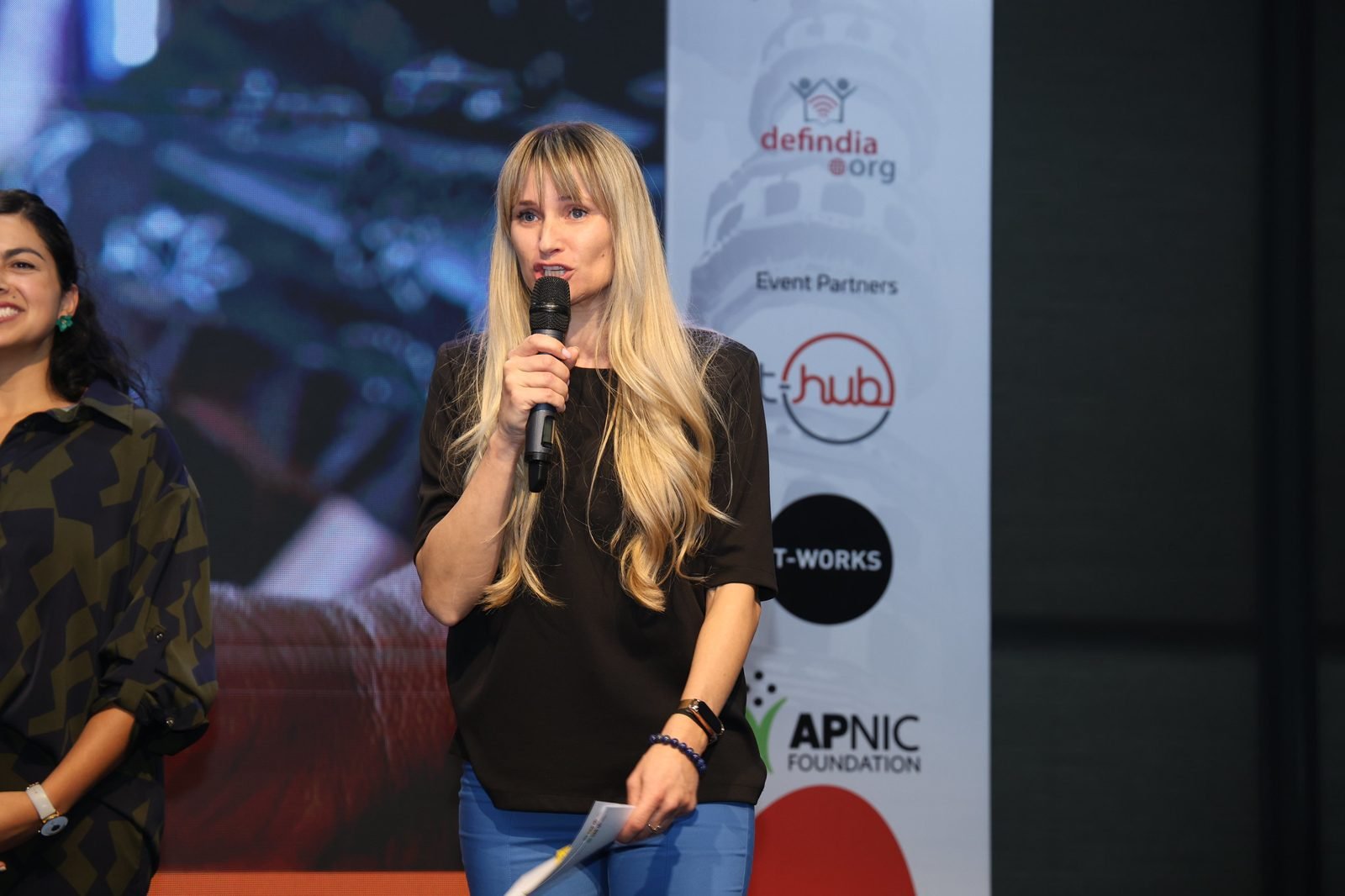
On 8 April 2025, Odeta Isevičiūtė spoke at the WSA Global Congress 2025 in Hyderabad, India, in the session "The Human Costs of Digital Divides: Design from the Margins". Over four days she also coached pitching teams and moderated a round of winners' pitches.
The event
The WSA Global Congress brings together the winners of the World Summit Awards, which select digital solutions with social impact from countries around the world. The 2025 congress ran from 6 to 9 April under the theme "Digital, Democracy & Us: Impact Solutions for Global Challenges", co-organised by WSA and the Digital Empowerment Foundation.
What we did there
Odeta's main talk was part of a 09:30–10:30 session at T-Hub "The Pinnacle", built from short talks and moderated by Peter A. Bruck, chairman of WSA. She shared the stage with speakers from the Telangana government, Miswag from Iraq, Trinidad and Tobago, and the Telangana Transgender Welfare Board. She spoke in English.
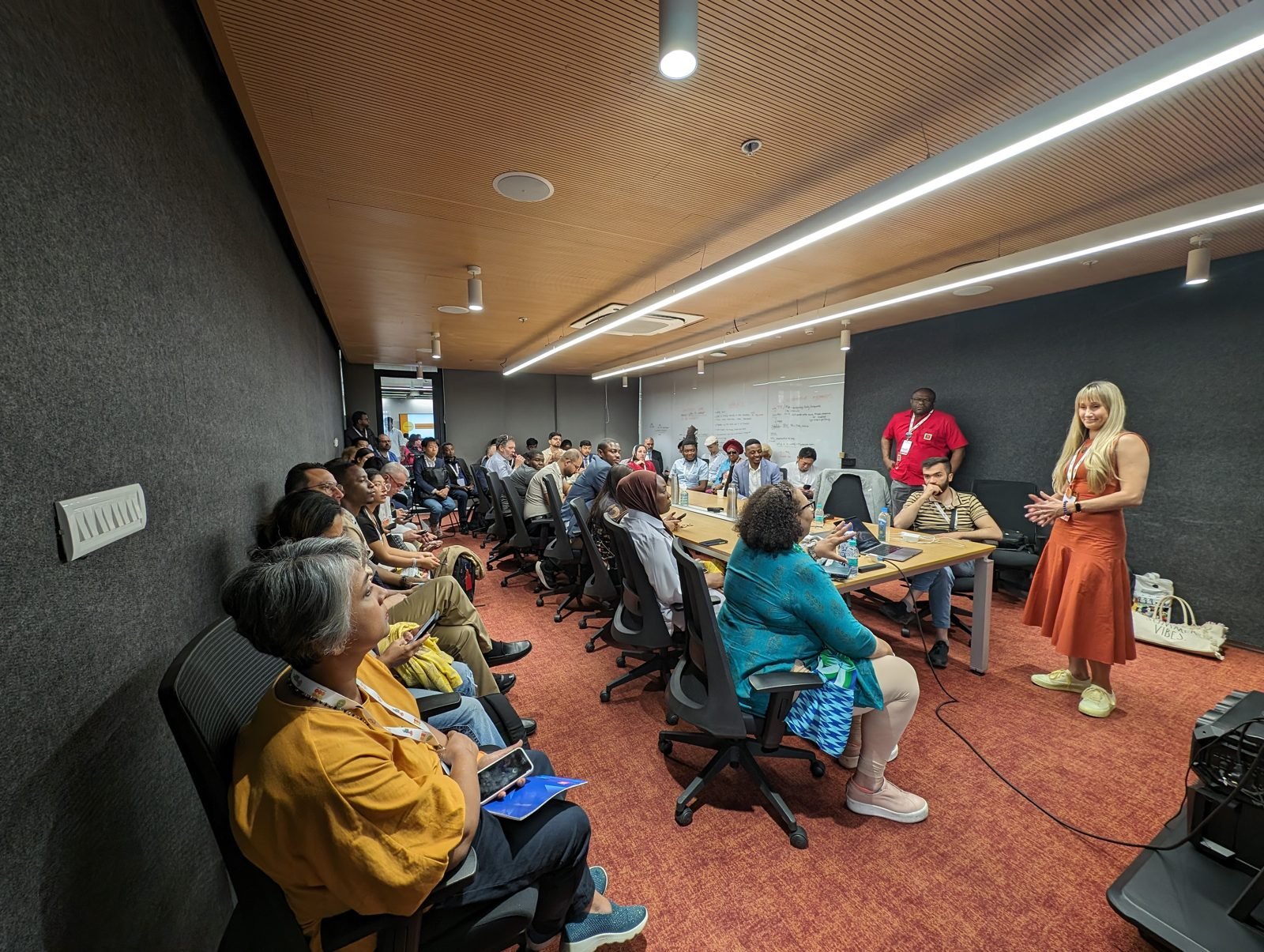
She had two more roles at the congress. On 6 April she worked as a WSA national expert in the "Test Your Pitch" coaching, helping winners sharpen their pitches. On 7 April she moderated the pitches of the Health & Well-Being winners.
Three takeaways from the talk
1. The biggest differentiating factor becomes hunger
Odeta opened with how fast AI disrupts itself: when OpenAI released GPT-4o image generation, roughly 12 months of work at image-generation startups lost its value overnight. It took the world 25–30 years to understand digital divides, and AI flipped them.
She told the story of two people. A business development manager her company hired in India had no AI background, and within a month he was launching AI side businesses over weekends. A freelance social media manager she met was losing gigs to AI and still refused to touch it, out of pride in her old skills. For decades the advice was "get an education". With AI handing degree-level tools to anyone who wants them, the people who pull ahead are the hungry ones.
2. The biggest AI divide is infrastructure
AI already closes gaps nothing else could. Odeta pointed to WSA winners: Livox, which helps people with multiple disabilities communicate, and Be My Eyes, which added AI image descriptions for blind users. But some barriers don't move. No electricity? No AI. No internet? No AI. She added a story from Independo, a WSA winner from Austria: even in Vienna, a city that cares deeply about equality, the technical university doesn't train engineers to build inclusive platforms. The gap sits in how systems are built.
3. AI bias is a people and incentives problem
On the claim that AI can't handle race, ethnicity or minority languages, she pointed to Beewise, another WSA winner, whose system tracks a single bee in a colony of 20,000. The technology can see the difference. The bias comes from people who train models on narrow data and lack the incentive to use diverse datasets.
She closed with a question. Fast-forward to the 2050s: AI-powered robots, nobody has to work, everything abundant. A paradise. Who owns it, who controls it, and by what rules?
If you lead a team and want the hungry ones to set the pace, see what ChangeAI has done with other teams.
Sources and notes
- WSA Global Congress 2025 programme agenda (PDF), World Summit Awards.
- The startup example refers to OpenAI's GPT-4o image generation release in March 2025. The "12 months of work" figure is Odeta's estimate from the talk.