Vilnius AI Summit 2026: how a business becomes the AI 1%
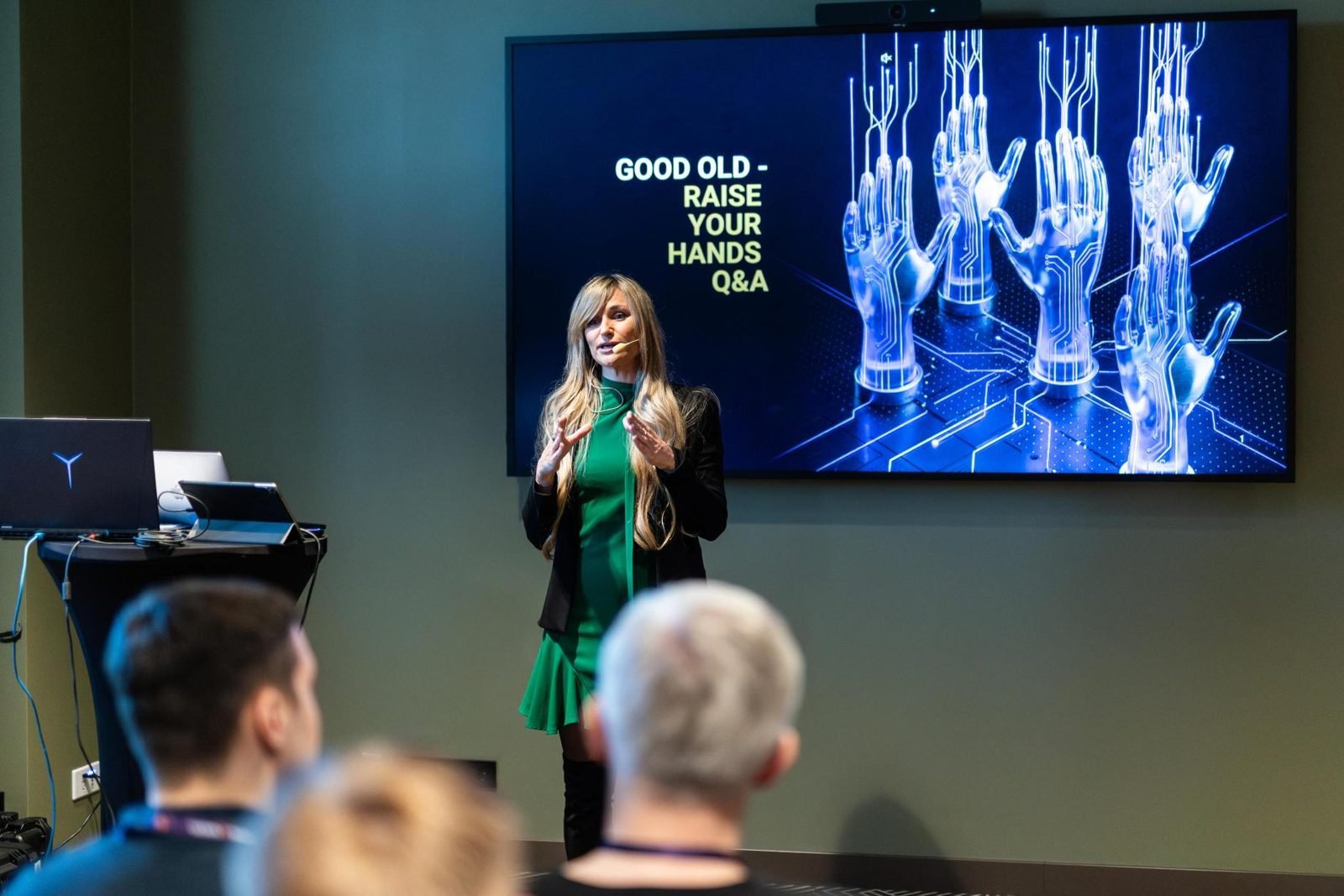
In April 2026, Odeta Isevičiūtė spoke at Vilnius AI Summit 2026, the three-day AI conference organised by AI.LT at the Radisson Blu Hotel Lietuva in Vilnius. Her talk was titled "99% of businesses fail to capture even the most obvious AI advantages. How do you become the 1%?" Her answer came in three parts: get better answers from the AI you already have, choose the adoption path that fits your company, and learn AI together with others.
The event
Vilnius AI Summit is AI.LT's annual business AI conference. The 2026 edition ran from 21 to 23 April at the Radisson Blu Hotel Lietuva, with more than 90 talks and workshops across 5 stages. The organiser cites more than 1,500 decision-makers in the audience [1].
What we did there
Odeta was on the summit's speaker roster as Founder & CEO of ChangeAI. Her talk was interactive: a "Good old raise your hands Q&A" slide had the audience answer by show of hands, so the room could see for itself how differently people use AI today. From there she walked through the AI Iceberg: AI Prompts, AI Assistants, AI Automations & Agents, and Custom Agents & Agentic Systems.
Three takeaways from the talk
1. Get better answers: give your prompt a DNA
The first and most obvious advantage is a better answer from the tools a team already uses. AI is an algorithm that follows strict mathematical rules, so clear, logical and structured instructions get better results. Odeta's "prompt DNA" turns "write me a blog post about AI in marketing" into a full brief: give the AI a role (a content expert), explain the context and the audience, ask it to search the web for the most popular tools, and set the format (five paragraphs, each with a tip a small business can use).
She added two methods on top. First, ask the AI to name the world's top 5 experts in your field, have it do the task as one of them, then have the others review the result. Second, ask the AI to put 10 questions to you about the task, answer them in detail, and let it write the prompt for you.
2. Choose your adoption path before you invest
The 1% decide how they will adopt AI before they spend money on it. Odeta described three paths. The first follows Toyota's Kaizen model: raise every employee's productivity step by step. Toyota aimed for at least 1% at a time; with AI, she suggested aiming for at least 10%, and the gains add up across the company. The second starts with automating whole processes, hiring specialists and building custom solutions, after the processes have been analysed and fixed. The third is a hybrid: build skills across the team and automate processes gradually, wherever it pays off. Which one fits depends on the company's size and its access to automation experts.
3. Learn AI together
Her last answer to the title question was about people. Her recommendation: find colleagues or friends to share AI wins and frustrations with. A Slack or WhatsApp group works well. New tools and features arrive so fast that no single person can keep up, so a group that tests, compares and passes on what works learns faster than anyone on their own.
If you want your team to practise these prompting methods together, see the AI Skills Development programme.
Sources and notes
- AI.LT, organiser of Vilnius AI Summit. The site now shows the next edition; event figures are the organiser's own.