Vienaragės in AI: a first-launch hackathon for women
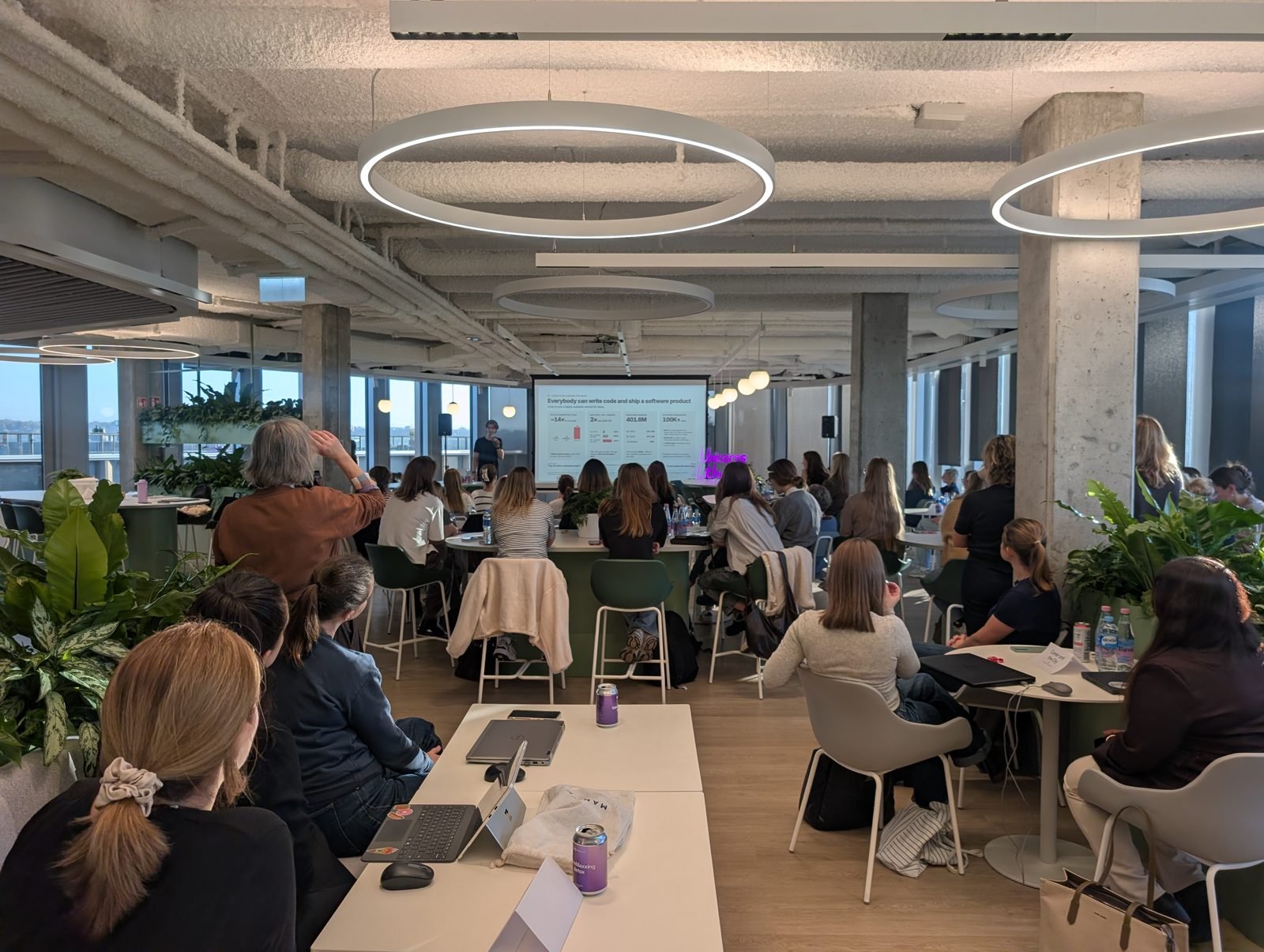
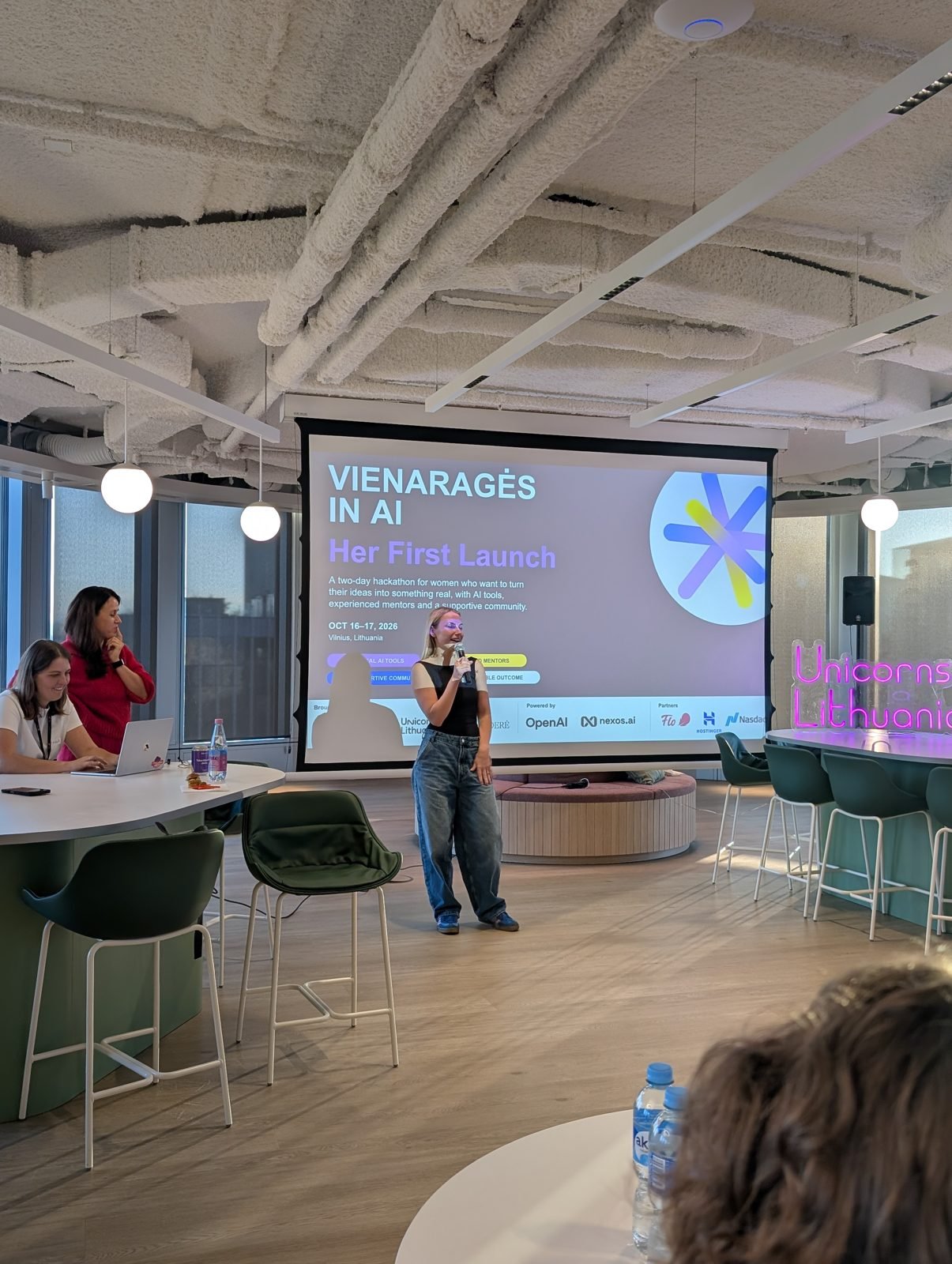
On 16–17 October 2026, Vienaragės in AI, a free AI hackathon for women, took place at Flo Health's office in Vilnius. Odeta Isevičiūtė organised it together with Women in AI Lithuania and Unicorns Lithuania. She also led the AI preparation session and mentored teams on Saturday.
The event
Vienaragės in AI is a beginner-friendly hackathon for women who have an idea and no idea where to start. No coding, AI experience or team was required. The edition had 50 places and up to 20 teams, and it ran in English.
The format stretched over five weeks. Applications closed on 25 September, solo applicants were matched into teams by 28 September, and three preparation sessions ran over the following three weeks: one on validating the idea, one on the founder's path and what early investors look at, and one hands-on AI session. The build weekend opened on Friday evening, 16:00 to 21:00, with teams starting work straight away. On Saturday each team had four 30-minute mentor conversations at its table, then built for the rest of the day and pitched in the evening to a jury. Each team had a paid OpenAI licence for the weekend and hosting credits from Hostinger.
What we did there
Odeta organised the hackathon from start to finish. She shaped much of the concept, built the event website herself, brought some of the mentors on board, and managed the jury process and the selection of winners, including the jury's scoring workbook.
In the third preparation week she led the online "Practical AI training". She showed participants how to use ChatGPT to build with Sites, so each of them could put up a first site of their own, and shared her best practices for everyday productivity with AI. On Saturday, 17 October, she mentored teams at their tables.
Three takeaways from the hackathon
1. A first launch fits into a weekend when the idea is clear
In the training, Odeta walked participants through building a first site with ChatGPT and Sites, no coding background needed. That moves the hard part of a first launch to the idea: who it is for and which problem it solves. Teams that came to the weekend with that settled, after the validation session, could spend their two days building.
2. AI pays off first in everyday work
The other half of the training was about daily productivity. Odeta shared the practices she relies on to get more out of AI in ordinary work, so participants could use AI as a working habit well before the build weekend. A team that already uses AI every day arrives at a hackathon knowing what to ask it for.
3. A jury process that scores what got built and what it's for
Odeta designed the judging around what each team built and how it would be used. The jury scored five equally weighted criteria: the problem is real, the solution fits it, what the team built, a credible next step, and how far the team came. A clickable mock-up, a working prototype and a tested concept could all reach the top score, because the site promised that all three count. One sub-point asked what AI let the team do in two days that they could not have done otherwise.
Jurors were told to leave slide polish, presenter confidence, technical difficulty and market size out of the score. "We learned a lot" scored lowest; a specific new skill that shows in the build scored highest. A juror who mentored a team left that team's row blank, so mentoring never cost a team points.
If you want to build your own first working version of an AI process in one day, ChangeAI's workshop runs on the same idea: bring a real task and leave with something that works.
Sources and notes
- Unicorns Lithuania, co-organiser.
- Women in AI, the global network behind Women in AI Lithuania, co-organiser.
- Format, programme and judging criteria: the event website and jury scoring workbook, both built by Odeta.