Tech Summit Vienna 2026: AI without a CTO
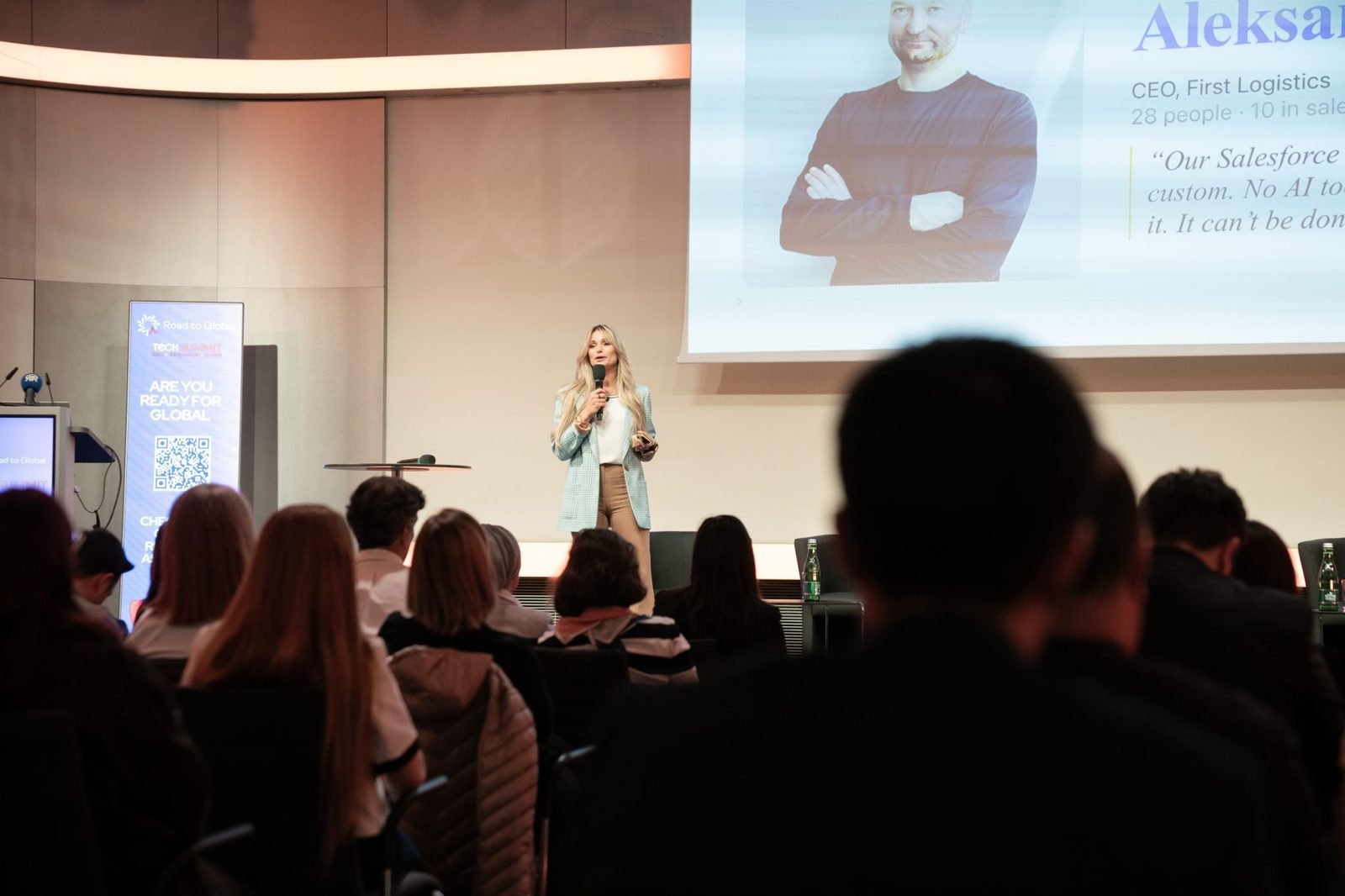
On 20 May 2026, Odeta Isevičiūtė gave the opening keynote at Tech Summit Vienna 2026, also run as Road to Global 2026, at the Vienna Chamber of Commerce. Her talk: "AI Without a CTO".
The event
Road to Global is a Turkish-led tech conference held in Europe, launched by Nexrone Global with Tech-Summit as strategic partner. The 2026 edition took place on 20 and 21 May in the Julius Raab Saal at the WKO, the Vienna Chamber of Commerce. Ahead of the event, Anadolu Agency reported that organisers expected about 1,500 participants from more than 50 countries: investors, institutions, founders and companies looking to grow into global markets.
What we did there
Odeta opened the summit with a keynote of about 10 minutes, in English. It was built as three stories about business leaders who rarely appear on tech stages, followed by why their companies stall with AI and what changed once their own people took over.
Three takeaways from the talk
1. The people who know the business become AI orchestrators
Odeta started with three leaders. Aleksandras runs First Logistics, a 28-person logistics company where ten salespeople repackage partner rates for customer enquiries all day; for three years his IT manager said the custom Salesforce setup meant "it can't be done". Martynas is the CFO of an e-commerce company with a finance team of twenty, months behind on reconciliation reports for the regulator and planning to hire more people. Gytis owns Litnobiles, an industrial coatings company where one technician holds thirty years of knowledge and locks himself away for two weeks to write each major proposal.
None of them needed a CTO. The answer was turning the people who already know the business into AI orchestrators: in Odeta's words, people "enabled to learn, empowered to experiment, and encouraged to share" their wins. At First Logistics, the team saved 66 hours in the first month and daily AI use rose from 38% to 71% of the team. Martynas's finance team cleared the backlog and the planned hires were cancelled. Gytis's company is now turning those thirty years of knowledge into a system the whole team can use.
2. Three reasons SMEs stall
Why does AI pass companies like these by? Odeta named three reasons. The first is human: teams are tired and buried in manual work, and the speed of AI news freezes them. The second is structural: no off-the-shelf tool fits a custom Salesforce, an unusual order volume or decades of data on one computer, and outside builders don't know which supplier is reliable or which client needs special handling. The third is the one that matters most: the people who know every process and exception are the same people stuck doing the manual work. They have the knowledge. They don't yet have the skills to use it differently.
3. The opportunity is the gap between the tool and the team
These companies will adopt AI through the tools already in their day: the Microsoft suite they use, the Google Workspace they pay for, the assistants built into platforms they trust. So the winners in tech will be the ones who close the gap between what a tool can do and what a real team in a real company actually does with it. Odeta called that gap enormous, even with all the SaaS tools on the market. She left the room of builders and investors with one question: "What value do you add?"
If your company has its own Aleksandras, Martynas or Gytis, the AI Sprint is how ChangeAI turns their teams into AI orchestrators.
Sources and notes
- Tech Summit Vienna 2026, event listing, Eventbrite.
- Türkiye-led tech conference Road to Global 2026 set for Vienna, Anadolu Agency: organisers, venue and expected attendance.
- First Logistics and Litnobiles are ChangeAI clients and were named on stage.