Can biased humans build unbiased AI? EYI Festival 2024
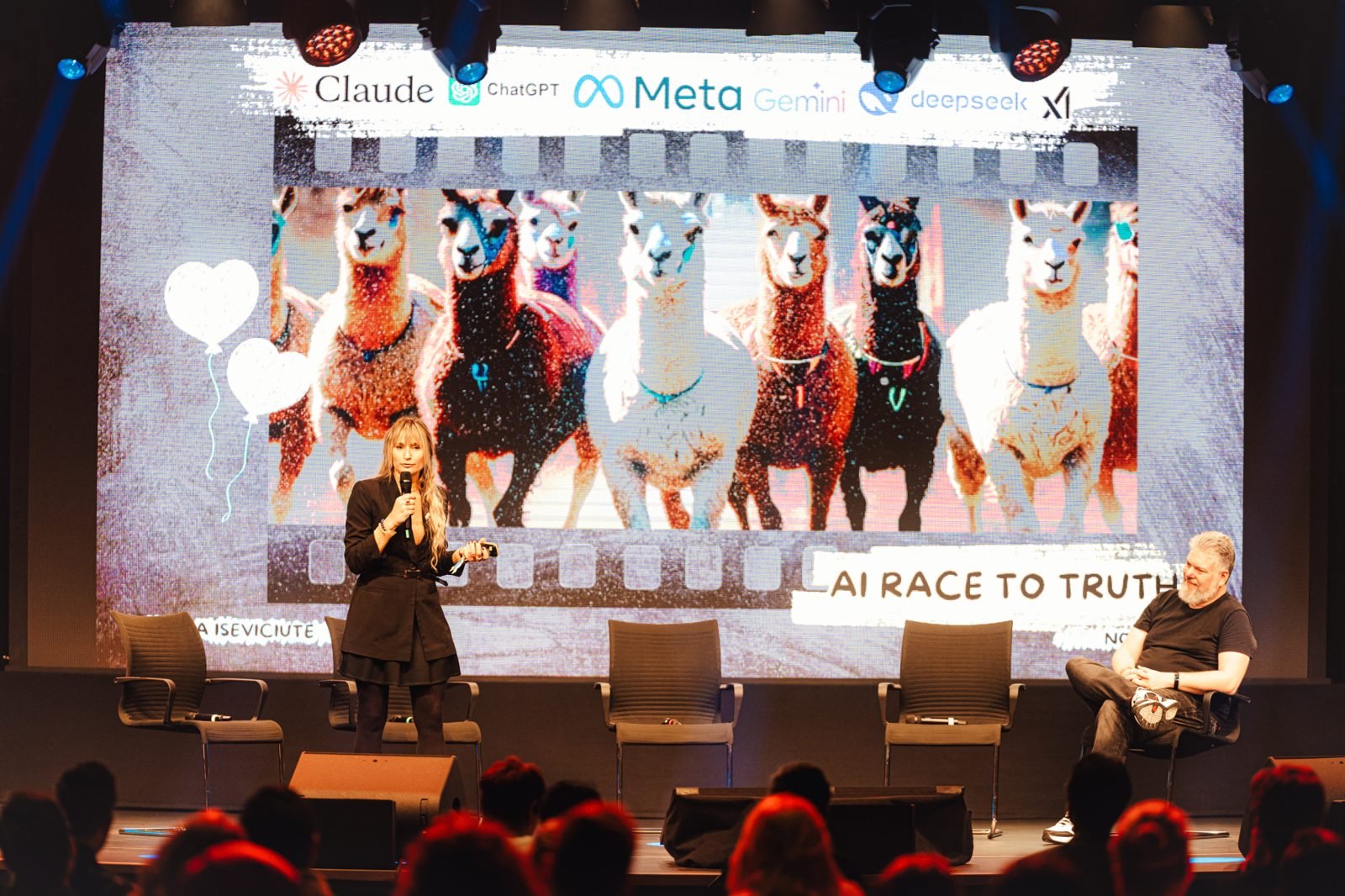
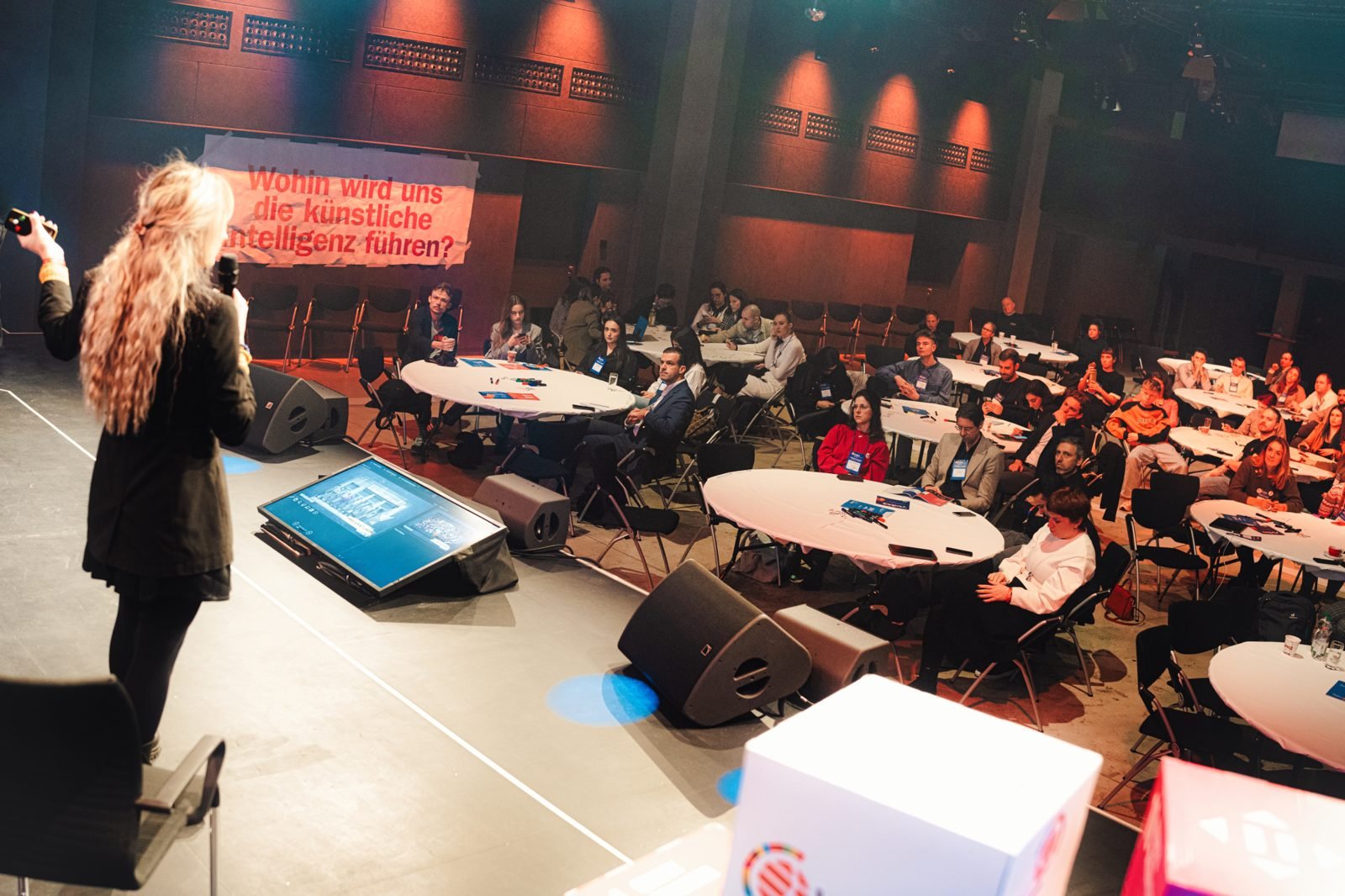
From 27 to 29 November 2024, Odeta Isevičiūtė took part in the European Young Innovators Festival in Graz, run by the World Summit Awards (WSA). At the festival she gave a talk on one question: can biased humans build unbiased AI?
The event
The European Young Innovators Festival is a WSA gathering for young changemakers, impact startups, thought leaders and organisations from across Europe. The 2024 edition ran under the theme "Boosting Innovation with Ethics", with a central day titled "Artificial X Human".
The programme moved around Graz over three days: Murinsel and Burg Graz on the first day, Helmut List Halle and the City Hall on the second, and UniCorn and Dom im Berg on the third. Local Styrian organisations and international guests took part alongside the young innovators.
What we did there
Odeta was listed as a key participant representing WSA Lithuania, in a mixed role of juror, mentor and host. Her talk was in English.
She opened with a hand-raise: "Raise a hand if you're unbiased." Nobody did, which was the point. The slide behind her showed a herd of llamas under the logos of Claude, ChatGPT, Meta, Gemini, DeepSeek and xAI, titled "AI race to truth".
Three takeaways from the talk
1. No human is unbiased, so no single unbiased truth will fit 8 billion people
Odeta described biases as limitations of information: the views we form from what we happened to read, see and live through. They aren't a defect. They got humans from primates to a room full of people discussing artificial intelligence.
Then she made it personal. She was born in Lithuania under Soviet occupation and lived through the switch to a market democracy. Some Lithuanians still prefer communism, because careers were simple, there were fewer draining consumer choices, and healthcare and education were equally available. Multiply that kind of disagreement by 8 billion people and you get 8 billion different mixes of bias. One universally accepted, unbiased truth for all of them won't exist.
2. Every lab embeds its own version of "right"
She quoted Anthropic CEO Dario Amodei, who has said the company wants its models to avoid strong or specific opinions beyond basic principles of democracy and the rule of law. Her question to the room: whose democracy? Which laws?
While Anthropic and OpenAI build in the principles "everyone can agree on", xAI runs its own truth-seeking with Grok, and DeepSeek in China builds its own idea of what is right for everyone. That's the race on her slide. Each lab is a group of biased humans, and each model carries its makers' version of "right".
3. Understand our biases and aim for coexistence
Her close moved away from control. Trying to scrub every bias out of AI trained on human data is a short-term worry. Perhaps our role is to understand our own biases, and to learn to coexist with this new intelligence as it grows more capable than we are.
If you want your team to use AI with a clear view of where its answers come from, the AI Skills Development programme is a good place to start.
Sources and notes
- European Young Innovators Festival 2024, World Summit Awards.
- The festival page spells the theme "ArtificalXHuman: Boosting Innovation with Ethics". The day Odeta's talk belonged to is not published, so this post doesn't name one.