Agmis × SoftwareOne: don't automate chaos
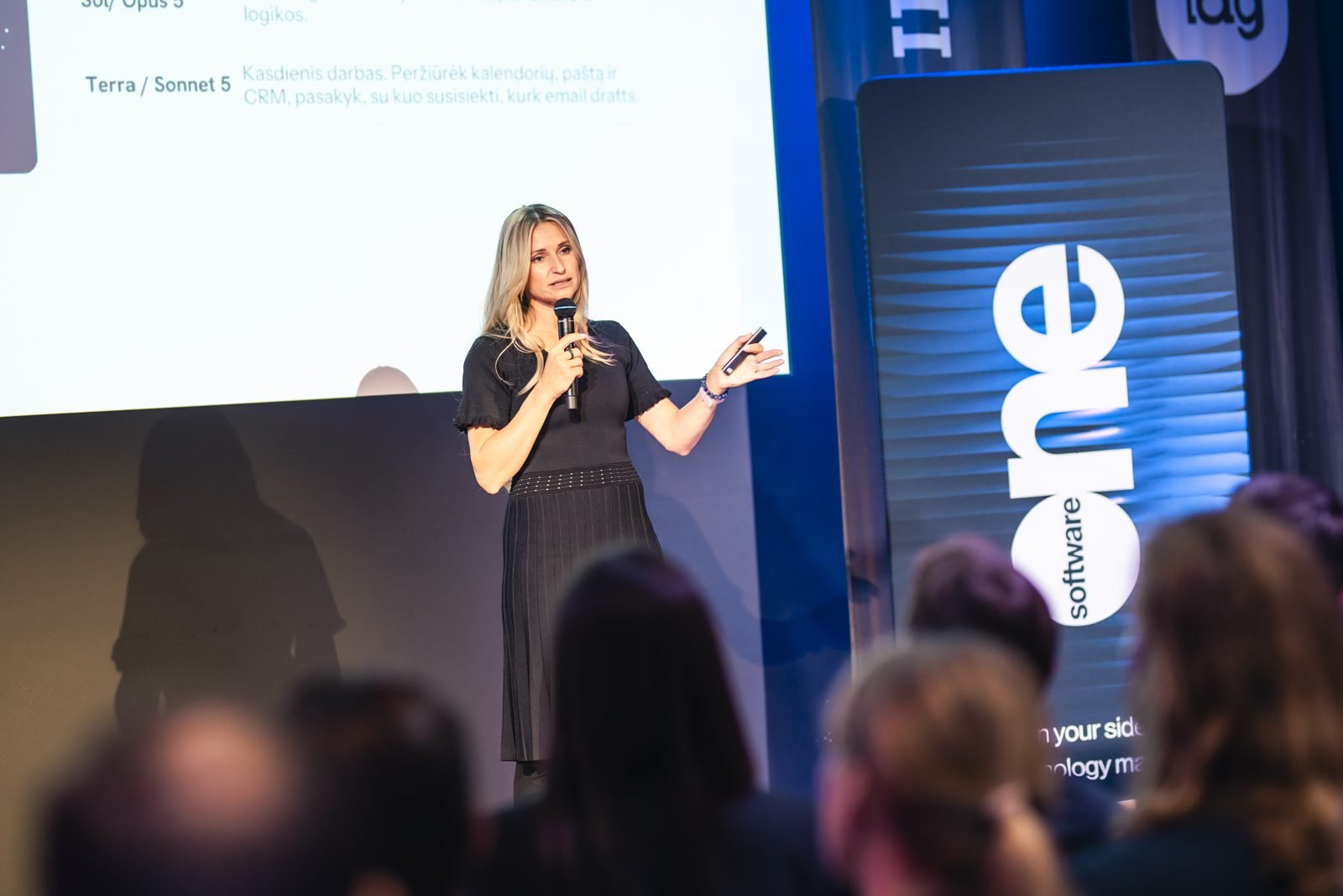
On 10 September 2026, Odeta Isevičiūtė spoke at DI vadovams: sprendimai, kurie keičia verslą ("AI for Leaders: Decisions That Change Business"), hosted by Agmis with SoftwareOne in Vilnius. Her talk: "Neautomatizuokite chaoso: trys sprendimai, kurių DI nepriims už vadovą" (Don't automate chaos: three decisions AI won't make for a leader).
The event
Agmis organised the afternoon with SoftwareOne, with SoftwareONE, ChangeAI and AWS as partners. It ran from 13:00 to 17:30 at Talent Garden Vilnius, Vilniaus g. 33, and was moderated by Ugnė Daniūnaitė of Agmis. The event was free and aimed at executives, IT specialists and the people who make AI decisions in their companies. More than 100 people registered.
The programme covered the decisions a company has to work through: Lukas Pultaražinskas on the legal side of using AI systems, Irmantas Metrikis on AI investment with a clear ROI, and Šarūnas Končius on what AI really costs to run.
What we did there
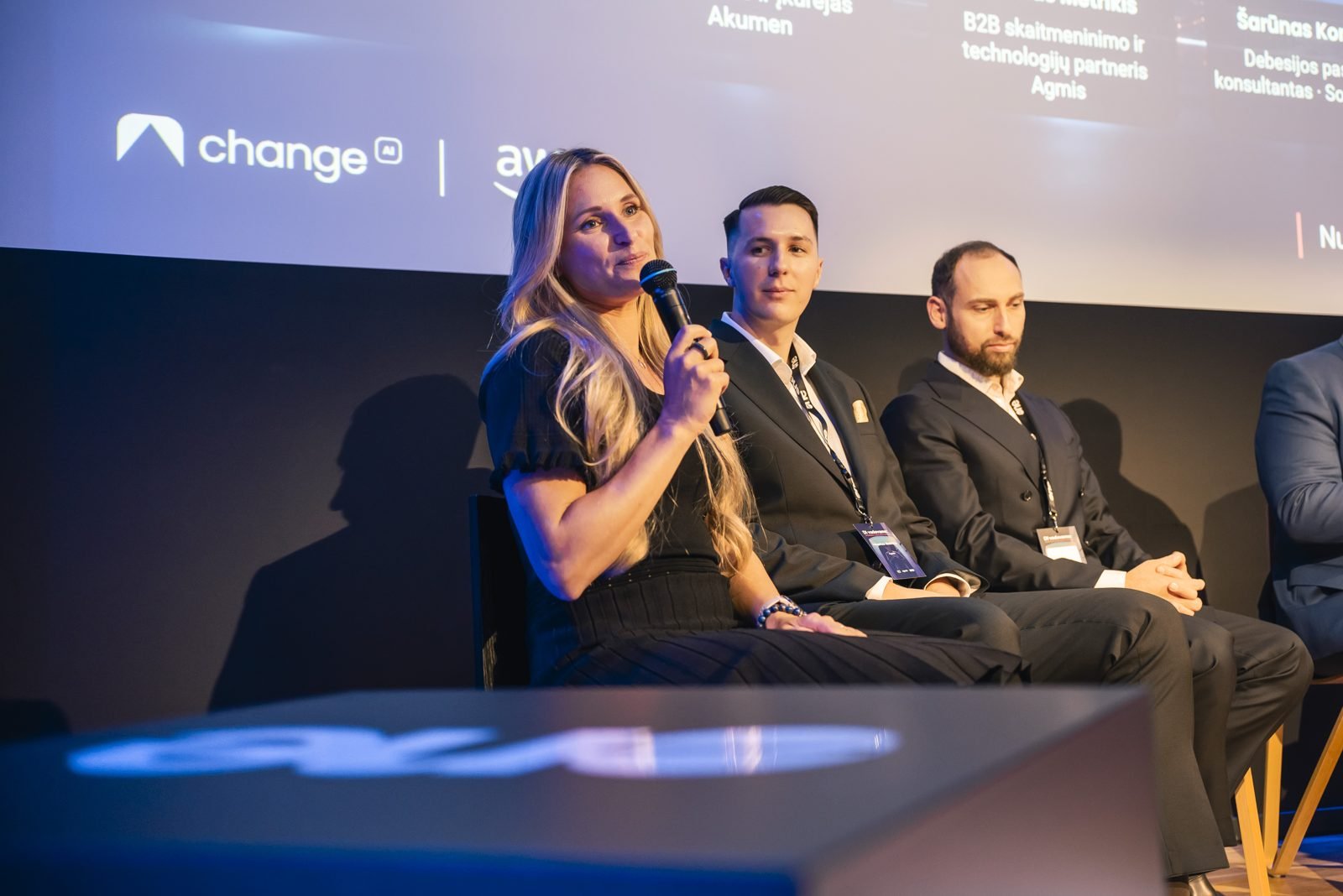
Odeta gave the first talk after the opening, 20 minutes in Lithuanian, from 14:15 to 14:35. It was built around one real process from a ChangeAI client, followed from the first photo to the last invoice. Later in the afternoon she joined the other speakers on the panel "DI praktikoje: atvira diskusija" (AI in practice: an open discussion).
Three takeaways from the talk
1. Don't automate chaos
The talk opened with a typical month at a client that manages more than 20,000 m² of housing. A maintenance manager photographs the meter readings and builds a report for the administrator. She checks the figures against official data, prepares a report for the manager and forwards everything to an outside accounting firm, which invoices the residents. Three people, each good at the job. Together the process took more than five days a month. Today it takes a day and three hours, and the outside invoicing fee is gone.
The trap is to give everyone AI and ask them to work faster. Each person speeds up their own step, everyone reports a win, and the chain stays exactly as broken as before. A step that should never have existed now just runs quicker.
2. The fix appears when two colleagues describe their work to each other
The solution came out of a room where the team was learning AI together. Odeta asked each person about their work. The maintenance manager described his part, the administrator described hers, and within a minute it was clear that much of what she did repeated work he had just done. Neither had seen it: each saw their own segment, and inside that segment everything was in order.
From what Odeta sees in the rooms she trains, about nine in ten people describe their own work perfectly and cannot see the chain beyond their desk. That is why it cannot be left to chance. Leaders decide who sits in that room, and when. As she put it at the close: "Technology you can buy today. That room you have to build yourselves."
3. Start with ambassadors and one process, and measure from day one
Every team has 10 to 20% of people who want to do this work: AI ambassadors. Give them time, tools and room to act, and the person who runs a process can improve it themselves. At Kärcher, a customer service lead built two assistants after training, and within three weeks other departments asked for the same. At Orbio World, 3,000 invoices that used to take a week are now processed in about two hours. Both started with one person and one process.
Her free advice: write down how long a task took before and how long it takes now, from the first day. Then decide what the freed time is for. In the property client's case no one lost a job: the outside invoice disappeared, and two people got time back for work they never had time for. Most Lithuanian companies care more about growth than about shrinking teams.
If you want to find the first process in your company worth putting two people in one room for, the AI Sprint starts there.