Agmis in Kaunas: get rid of manual work before buying agents
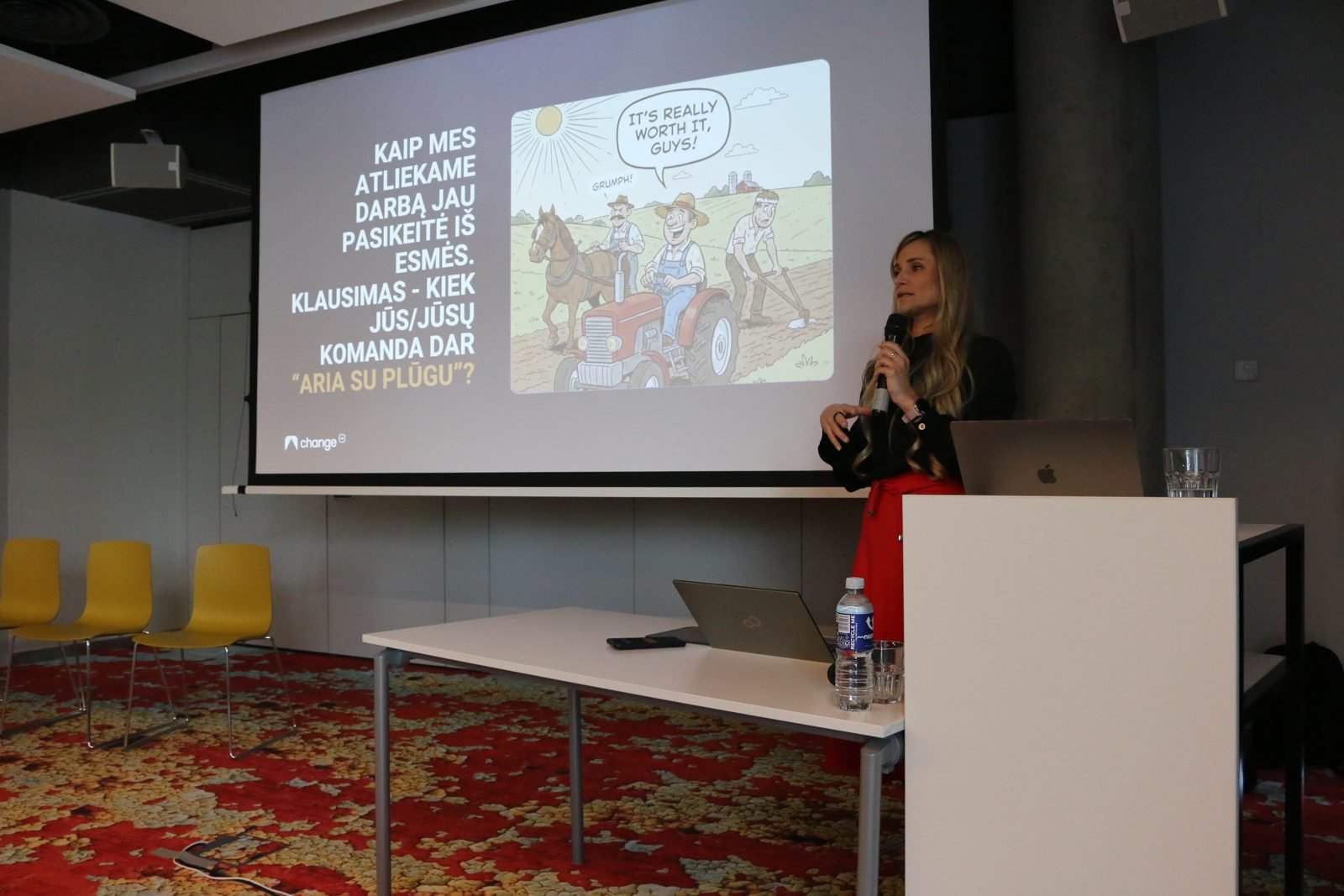
On 23 April 2026, Odeta Isevičiūtė opened DI versle: kas realiai veikia, o kas tik kainuoja (AI in business: what actually works and what just costs money), a morning event by Agmis in Kaunas. Her talk: „Jūs galvojate, kad jums reikia DI agentų, o išties reikia atsikratyti rankinio darbo“ (roughly: "You think you need AI agents, but what you really need is to get rid of manual work").
The event
Agmis organised the event with partners SoftwareONE and ChangeAI. It ran from 09:00 to 12:15 in the Teslos salė at Jonavos g. 7, Kaunas, free of charge with registration. The audience was executives, decision-makers and IT specialists who want to know how AI could work in their own company.
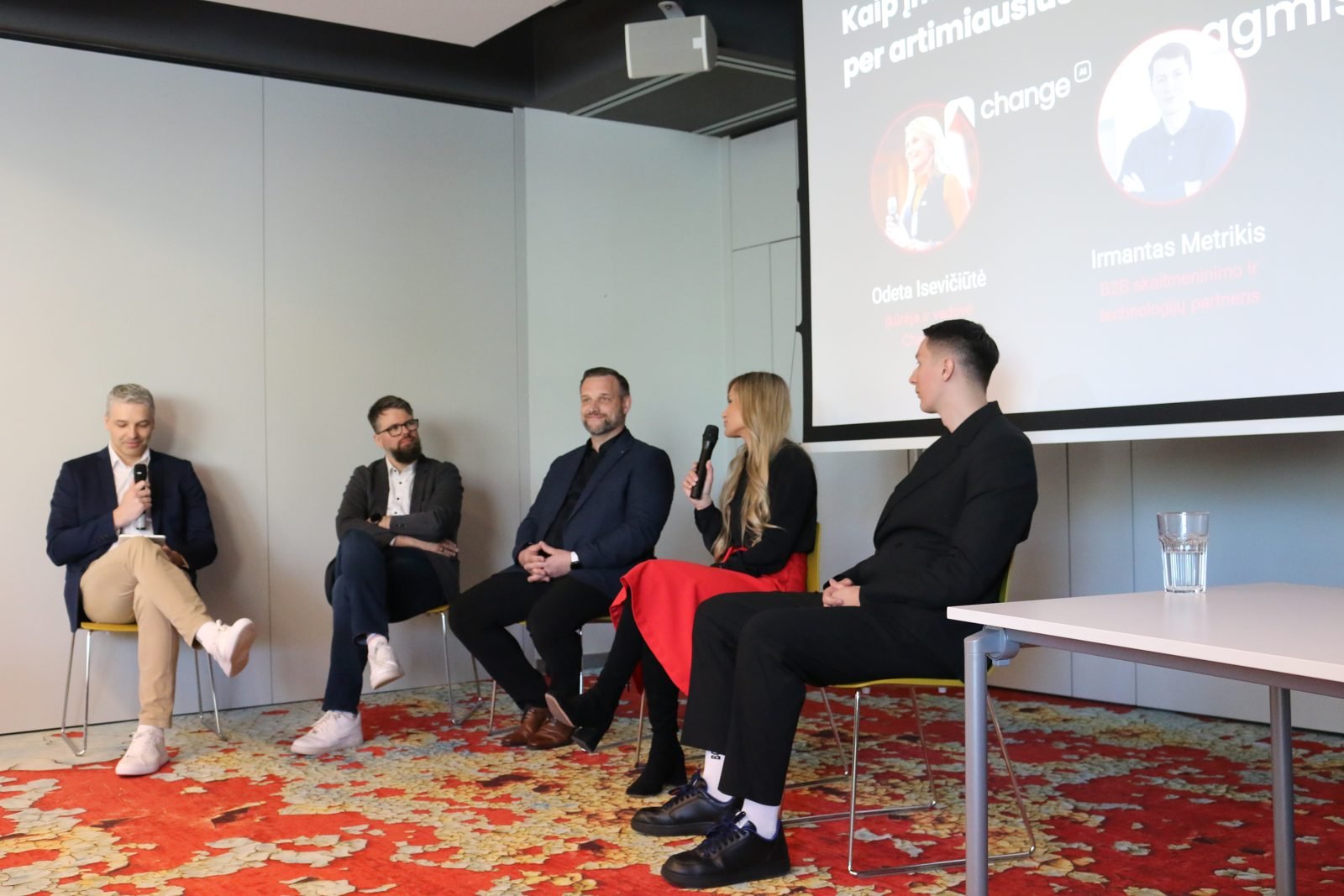
After Odeta's opening talk, Ignas Sidaras (Sorainen) spoke on the legal side of using AI systems, Vidmantas Bendikas (Agmis) on data in the AI era, and Irmantas Metrikis (Agmis) on the mistakes companies make with AI. The morning closed with a panel on keeping up with AI over the next 12 months, joined by Tomas Ruzgys, CEO of SoftwareOne Lithuania.
What we did there
Odeta gave the first talk of the morning, 30 minutes in Lithuanian, from 09:15 to 09:45. She started with three quick questions to the room: who is happy with the answers they get from AI, who uses GPTs, Gems or Copilot agents, and who runs no-code automations. Then she walked the room through the AI Iceberg, from prompts down to custom agentic systems, with the cost of each level next to it.
Later in the morning she sat on the closing panel with the other speakers.
Three takeaways from the talk
1. Manual work is the first target
The opening questions showed what Odeta sees inside almost every company: some people already save 10 hours a week with AI, while their colleagues still plough by hand and haven't started with the simplest prompts. Her line on slide 4 was blunt: it makes no difference how sophisticated the AI tools you roll out are if part of the company is still behind a plough. The productivity gain AI can give only shows up across the whole company once those people move onto the tractor. Agents come later.
2. Custom agentic systems are the expensive end of the iceberg
At the bottom of the iceberg sit custom agentic systems: autonomous, connected to your systems, built by AI engineers. Even the smallest pilot starts at €30–50k, and a full system runs far higher. For most companies Odeta's advice was to hold off hiring AI engineers. Assistants and automations on the tools you already pay for, Gemini or Copilot, get you much further first. Before building anything, ask your CRM, ERP and accounting vendors what AI features they are about to ship, so you don't pay tens of thousands for something that arrives in an update.
3. The people who do the work remove it themselves
Odeta told two stories. Last year she hired a freelance marketer who barely used AI. Within a week it was clear she could do about ten times more of those tasks herself with AI. The second came from her course: a customer service lead at Kärcher set up NotebookLM with the company's service documents and paired it with a Gemini Gem to draft replies. Her team saved 10 hours in the first week and 20 in the second. By the third week, colleagues in other departments were asking her to build the same for them. The person who knew the manual work best was the one who got rid of it.
If you want to find which manual work in your company to remove first, the AI Sprint starts there.
Sources and notes
- DI versle: kas realiai veikia, o kas tik kainuoja, event page and agenda, Agmis.
- The talk followed the same AI Iceberg structure Odeta used at Verslo žinios' DI efektyvumui 2026 in February. This post covers the parts on manual work and cost.